








Introduction
As businesses become increasingly dependent on technology, choosing the right approach to IT management has become a strategic decision rather than simply an operational one. Every organization, regardless of its size, relies on computers, networks, cloud platforms, software applications, and cybersecurity solutions to support daily activities. Maintaining these systems requires skilled professionals who can monitor performance, resolve technical issues, and ensure business continuity.
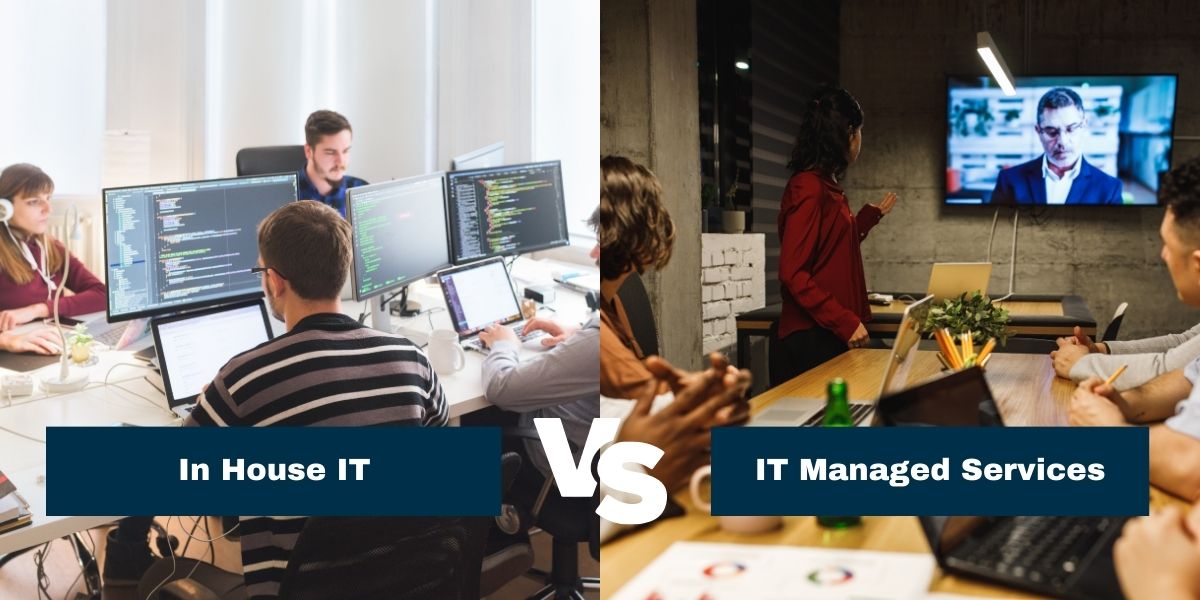
When planning their technology strategy, organizations typically choose between two primary models: managed IT service and in-house IT support. Both options aim to keep business systems operational, but they differ significantly in terms of cost, expertise, scalability, and long-term value.
Understanding the strengths and limitations of each approach helps business leaders make informed decisions that align with their operational requirements, budget, and future growth plans.
Understanding Managed IT Service
A managed IT service is a professional technology solution provided by an external company that assumes responsibility for monitoring, maintaining, and supporting an organization’s IT environment. Rather than hiring a large internal team, businesses partner with experienced IT specialists who deliver continuous technical support through a service agreement.
Managed service providers use advanced monitoring tools to identify issues before they become serious problems. They perform routine maintenance, install software updates, monitor security threats, manage backups, and provide technical assistance whenever required.
This proactive approach helps businesses reduce downtime while improving system reliability and security.
Understanding In-House IT Support
In-house IT support refers to an internal team of employees responsible for managing an organization’s technology infrastructure. These professionals work directly for the company and are familiar with its daily operations, internal procedures, and business objectives.
An internal IT department typically manages hardware installations, software deployment, network administration, user support, and infrastructure maintenance. Since they are physically present within the organization, they can respond quickly to on-site technical issues.
Many large enterprises prefer maintaining internal IT teams because they require dedicated technical professionals to support complex technology environments and specialized business systems.
Cost Comparison
Cost is one of the most important factors when choosing between managed IT service and in-house support.
Hiring an internal IT department involves multiple expenses beyond employee salaries. Organizations must also cover recruitment costs, employee benefits, ongoing training, office space, hardware, software licenses, and professional certifications. As technology evolves, continuous skill development becomes necessary, adding to operational costs.
Managed IT services generally operate on predictable monthly pricing. Businesses receive access to an experienced team of specialists without bearing the costs associated with hiring and maintaining a full-time internal department. This pricing model simplifies budgeting and often proves more cost-effective for small and medium-sized organizations.
For companies with limited IT budgets, outsourcing technology management can provide access to enterprise-level expertise at a lower overall cost.
Technical Expertise
Technology continues to evolve rapidly, making it difficult for individual professionals to master every area of information technology. Modern businesses require expertise in cloud computing, cybersecurity, networking, virtualization, data backup, compliance, and infrastructure management.
Managed IT service providers employ specialists with diverse technical backgrounds. Instead of relying on one or two general IT staff members, businesses gain access to professionals with expertise across multiple technology disciplines.
An internal IT department may have highly skilled employees, but its expertise is often limited by team size and available resources. Specialized knowledge may require additional training or external consultants, increasing overall expenses.
Scalability and Business Growth
Business requirements change over time. Companies may expand into new markets, hire additional employees, adopt cloud technologies, or implement new software platforms. Their IT infrastructure must grow accordingly.
Managed IT services are designed to scale with business growth. Providers can quickly add users, expand cloud resources, strengthen cybersecurity measures, or deploy additional technical support as organizational needs evolve.
Internal IT departments may require additional hiring, infrastructure investments, and extensive planning before they can support significant business expansion. This process often takes longer and increases operational costs.
Organizations experiencing rapid growth frequently benefit from the flexibility offered by managed IT services.
Response Time and Availability
Technical issues can occur at any time, including outside regular business hours. System failures, cybersecurity incidents, and network disruptions often require immediate attention.
Many managed IT service providers offer round-the-clock monitoring and support. Their teams continuously monitor business systems, allowing them to identify and address problems before users even notice them.
Internal IT departments usually operate during standard business hours unless the organization maintains dedicated shift schedules. Emergency support outside working hours may be limited depending on staffing levels.
Continuous monitoring gives managed service providers an advantage in maintaining high system availability.
Security Management
Cybersecurity has become one of the most important responsibilities within any IT environment. Organizations face increasingly sophisticated threats, making continuous protection essential.
Managed IT service providers invest heavily in advanced security technologies and dedicated security professionals. They regularly update systems, monitor suspicious activity, perform vulnerability assessments, and implement industry best practices to reduce security risks.
Effective security management generally includes:
- Continuous threat monitoring and endpoint protection
- Regular security updates, vulnerability assessments, and compliance support
- Data backup, disaster recovery planning, and incident response
While internal IT teams can also implement strong security measures, maintaining specialized cybersecurity expertise requires significant investment in tools, certifications, and ongoing education.
Control and Customization
One advantage of an in-house IT department is direct control over technology operations. Internal staff work closely with employees, understand company culture, and can immediately adjust priorities according to business requirements.
Organizations with highly specialized software systems or unique operational processes may prefer having dedicated internal professionals who fully understand their environment.
Managed IT service providers also offer customized solutions, but some organizations may feel they have less direct oversight because technical operations are handled externally. Effective communication and clearly defined service agreements help overcome this concern.
Maintenance and System Monitoring
Technology infrastructure requires continuous maintenance to remain secure and efficient. Operating systems, applications, servers, and networking equipment all need regular updates and performance optimization.
Managed IT services emphasize proactive maintenance. Instead of waiting for equipment failures, providers continuously monitor systems, install updates, optimize performance, and resolve minor issues before they affect productivity.
This preventive approach reduces unexpected downtime while extending the lifespan of technology investments.
Internal IT departments can also perform proactive maintenance, but their ability to monitor systems continuously depends on available staffing and monitoring tools.
Which Option Is Better for Small Businesses?
Small businesses often operate with limited budgets while still requiring reliable technology support. Hiring multiple full-time IT professionals may not be financially practical.
For these organizations, managed IT services provide an attractive solution because they offer professional expertise, predictable costs, and access to a wide range of specialists without significant overhead expenses.
Larger enterprises with complex internal systems, proprietary applications, or strict operational requirements may benefit from maintaining an internal IT department while also partnering with managed service providers for specialized projects.
Choosing the Right Approach
Selecting between managed IT service and in-house support depends on several important factors, including business size, technology complexity, available budget, regulatory requirements, and long-term objectives.
Before making a decision, organizations should evaluate:
- Current IT infrastructure and future expansion plans
- Internal technical expertise and staffing requirements
- Security, compliance, and business continuity needs
A careful assessment helps ensure that the chosen IT strategy supports both immediate operational requirements and future business growth.
Conclusion
Both managed IT service and in-house IT support offer valuable advantages, but the right choice depends on an organization’s unique needs. Managed IT services provide cost efficiency, broad technical expertise, proactive monitoring, and scalability, making them an excellent option for many small and medium-sized businesses. In contrast, in-house IT support offers greater direct control, immediate on-site assistance, and deeper familiarity with internal operations.
As technology continues to evolve, many organizations are adopting a hybrid approach that combines the strengths of both models. By carefully evaluating business objectives, technology requirements, and available resources, companies can develop an IT strategy that enhances productivity, strengthens cybersecurity, and supports sustainable long-term growth.